
Interpersonal meaning in AI-human conversations: An SFL analysis of casual VS. academic interactions in ChatGPT responses
DOI:
https://doi.org/10.33474/j-reall.v7i2.24749Keywords:
ChatGPT, human-machine communication, interpersonal meaning, register theory, systemic functional linguisticsAbstract
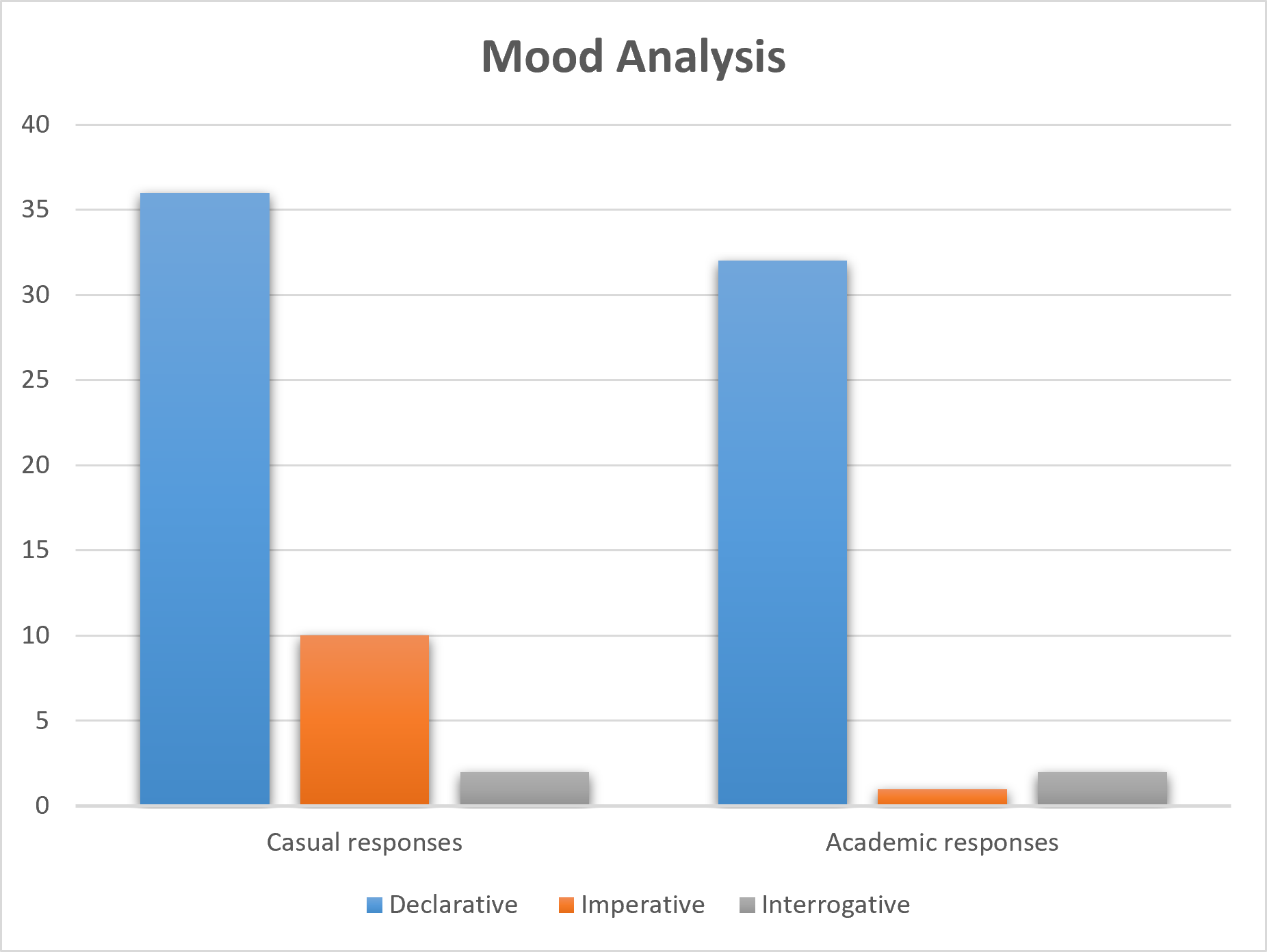
The increasing use of conversational artificial intelligence in casual and academic communication raises significant questions about how such systems create interpersonal meaning through language. Limited research has been conducted in terms of linguistic mechanisms through which interpersonal relationships are established across different registers. Addressing this gap, the current study explores how ChatGPT creates interpersonal meaning in informal and formal academic interactions through the lens of the systemic functional linguistics (SFL) framework. This qualitative SFL-based analysis research examines 10 ChatGPT-generated responses to prompts that were purposely designed, comprising five casual and five academic interactions that were broken down into 86 clauses and analyzed through the lens of the interpersonal metafunction, focusing on mood, modality, and appraisal, facilitated by register theory and the three dimensions of human-machine communication (HMC). The findings reveal a clear variation in the use of ChatGPT's interpersonal strategies depending on the register. Casual interactions exhibit a higher number of appraisal resources, especially affect and engagement, which reflect a relational and user-oriented stance. In contrast, academic interactions are described by the predominance of declarative mood and medium to high. This study provides insight into how AI imitates human behavior, such as interactional roles through language selection. The findings highlight the importance of register sensitivity in AI-human communication and have implications for linguistics, language education, and chatbot design. It is suggested that further studies should consider investigating larger datasets, more registers, and comparative analyses of different AI models.
References
Bender, E. M., Gebru, T., McMillan-Major, A., & Shmitchell, S. (2021). On the dangers of stochastic parrots: Can language models be too big? Proceedings of the 2021 ACM Conference on Fairness, Accountability, and Transparency (610–623). Association for Computing Machinery. https://doi.org/10.1145/3442188.3445922
Brown, T. B., Mann, B., Ryder, N., Subbiah, M., Kaplan, J., Dhariwal, P., Neelakantan, A., Shyam, P., Sastry, G., Askell, A., Agarwal, S., Herbert-Voss, A., Krueger, G., Henighan, T., Child, R., Ramesh, A., Ziegler, D. M., Wu, J., Winter, C., … Amodei, D. (2020). Language models are few-shot learners. Advances in Neural Information Processing Systems, 33, 1877–1901.
https://doi.org/10.48550/arXiv.2005.14165
Chen, L., Zaharia, M., & Zou, J. (2024). How is ChatGPT’s behavior changing over time? Harvard Data Science Review, 6(2). https://doi.org/10.1162/99608f92.5317da47
Clarke, T., & Graesser, A. (2021). Natural language and dialogue systems: Building socially intelligent agents. Computational Linguistics, 47(2), 243–276. https://doi.org/10.1162/coli_a_00404
Creswell, J. W., & Poth, C. N. (2023). Qualitative inquiry and research design: Choosing among five approaches (5th ed.). SAGE Publications.
Dwivedi, Y. K., Kshetri, N., Hughes, L., Slade, E. L., Jeyaraj, A., Kar, A. K., Baabdullah, A. M., Koohang, A., Raghavan, V., Ahuja, M., Albanna, H., Albashrawi, M. A., Al-Busaidi, A. S., Balakrishnan, J., Barlette, Y., Basu, S., Bose, I., Brooks, L., Buhalis, D., … Wright, R. (2023). “So what if ChatGPT wrote it?” Multidisciplinary perspectives on opportunities, challenges and implications of generative conversational AI for research, practice and policy. International Journal of Information Management, 71, 102642. https://doi.org/10.1016/j.ijinfomgt.2023.102642
Eggins, S. (2004). An introduction to systemic functional linguistics (2nd ed.). Continuum
Floridi, L., & Chiriatti, M. (2020). GPT-3: Its nature, scope, limits, and consequences. Minds and Machines, 30(4), 681–694. https://doi.org/10.1007/s11023-020-09548-1
Guzman, A. L., & Lewis, S. C. (2020). Artificial intelligence and communication: A human–machine communication research agenda. New Media & Society, 22(1), 70–86. https://doi.org/10.1177/1461444819858691
Halliday, M. A. K., & Hasan, R. (1989). Language, context, and text: Aspects of language in a social-semiotic perspective (2nd ed.). Oxford University Press.
Halliday, M. A. K., & Matthiessen, C. (2014). Halliday’s Introduction to Functional Grammar (4th ed.). Routledge.
Hancock, J. T., Naaman, M., & Levy, K. (2020). AI-mediated communication: Definition, research agenda, and ethical considerations. Journal of Computer-Mediated Communication, 25(1), 89–100. https://doi.org/10.1093/jcmc/zmz022
Hwang, M., & Lee, H.-K. (2025). Analyzing linguistic gains and interaction patterns in ChatGPT-assisted L2 writing revision: A case study of adult EFL learners. Multimedia-Assisted Language Learning, 28(4), 25–52. https://doi.org/10.15702/mall.2025.28.4.25
Jurafsky, D., & Martin, J. H. (2023). Speech and language processing (3rd ed.). Draft chapters. Stanford University. https://web.stanford.edu/~jurafsky/slp3/
Kasneci, E., Sessler, K., Küchemann, S., Bannert, M., Dementieva, D., Fischer, F., Gasser, U., Groh, G., Günnemann, S., Hüllermeier, E., Krusche, S., Kübler, S., Peters, C., Pfeffer, J., Söllner, M., Voelkle, M. C., & Kasneci, G. (2023). ChatGPT for good? On opportunities and challenges of large language models for education. Nature Human Behaviour, 7(11), 1856–1864. https://doi.org/10.1016/j.lindif.2023.102274
Liu, D., Demberg, V., (2023). ChatGPT vs human-authored text: insights into controllable text summarization and sentence style transfer. arXiv:2306.07799 [cs.CL]. https://doi.org/10.48550/arXiv.2306.07799
Luger, E., & Sellen, A. (2016). “Like having a really bad PA”: The gulf between user expectation and experience of conversational agents. Proceedings of the 2016 CHI Conference on Human Factors in Computing Systems, 5286–5297. https://doi.org/10.1145/2858036.2858288
Martin, J. R. & Rose, D. (2003). Working with discourse: Meaning beyond the clause. London: Continuum.
Martin, J. R., & White, P. R. R. (2005). The language of evaluation: Appraisal in English. Palgrave Macmillan.
Nass, C., & Moon, Y. (2000). Machines and mindlessness: Social responses to computers. Journal of Social Issues, 56(1), 81–103. https://doi.org/10.1111/0022-4537.00153
Rezeki, S., Saragih, A., & Setiasari, W. (2022). Interpersonal metaphor in R. S. Regin Silvest and Malini Ganapathy's anthology of Covid-19 poems. Proceedings of the 6th Annual International Seminar on Transformative Education and Educational Leadership (AISTEEL 2021), 591(Aisteel), 226-230. https://doi.org/10.2991/assehr.k.211110.087
Sandelowski, M. (2000). Whatever happened to qualitative description? Research in Nursing & Health, 23(4), 334–340. https://doi.org/10.1002/1098-240X(200008)23:4<334::AID-NUR9>3.0.CO;2-G
Sofyan, D., & Wulan, R. (2021). Exploring the transference of mood in interpersonal metaphor: A qualitative analysis of All the Light We Cannot See. Journal of Applied Linguistics, 11(2), 85–98. https://doi.org/10.30743/jol.v3i1.3705
Sugiyono, S. (2015). Metode penelitian pendidikan: Pendekatan kuantitatif, kualitatif, dan R&D [Educational research methods: Quantitative, qualitative, and R&D approaches]. Alfabeta.
Sundar, S. S. (2020). Rise of machine agency: A framework for studying the psychology of human–AI interaction (HAII). Journal of Computer-Mediated Communication, 25(1), 74–88. https://doi.org/10.1093/jcmc/zmz026
Weidinger, L., Mellor, J. Rauh, M., Griffin, C., Uesato, J., Huang, P., Cheng, M., Glaese, M., Balle, B., Kasirzadeh, A., Kenton, Z., Brown, S., Hawkins, W., Stepleton, T., Biles, C., Birhane, A., Haas, J., Rimell, L., Hendricks, L. A., … Gabriel, I. (2022). Ethical and social risks of harm from language models. arXiv preprint arXiv:2112.04359.
Yu, D., Bondi, M., & Hyland, K., (2024). Can GPT-4 learn to analyse moves in research article abstracts? Appl. Linguist., amae071 https://doi.org/10.1093/applin/amae071
Zhu, J.-J., Jiang, J., Yang, M., Ren, Z. J. (2023). ChatGPT and environmental research. Environmental Science & Technology, 57(46), 17667-17670. Retrieved from https://pubs.acs.org/doi/10.1021/acs.est.3c01818
Downloads
Published
How to Cite
Issue
Section
License
Copyright (c) 2026 Mutiara Zein, Rusdi Noor Rosa, Rahmadsyah Rangkuti, T. Thyrhaya Zein, Rahmah Fithriani

This work is licensed under a Creative Commons Attribution 4.0 International License.
Authors who publish this journal agree to the following terms:
- Authors retain copyright and grant the journal right of first publication with the work simultaneously licensed under a Creative Commons Attribution License that allows others to share the work with an acknowledgement of the work's authorship and initial publication in this journal.
- Authors can separately make additional contractual arrangements for non-exclusive distribution published by the journal (e.g., publish it in a book), with an acknowledgement of its initial publication in this journal.
- Authors are allowed and encouraged to send their work via online (e.g., in the institutional repositories or their website) after published by the journal.