Which works better for speaking? Task-based vs. cooperative role-playing in vocational EFL contexts
DOI:
https://doi.org/10.33474/j-reall.v7i2.25444Keywords:
communicative competence, cooperative role-play, speaking skills, task-based role-play, vocational EFLAbstract
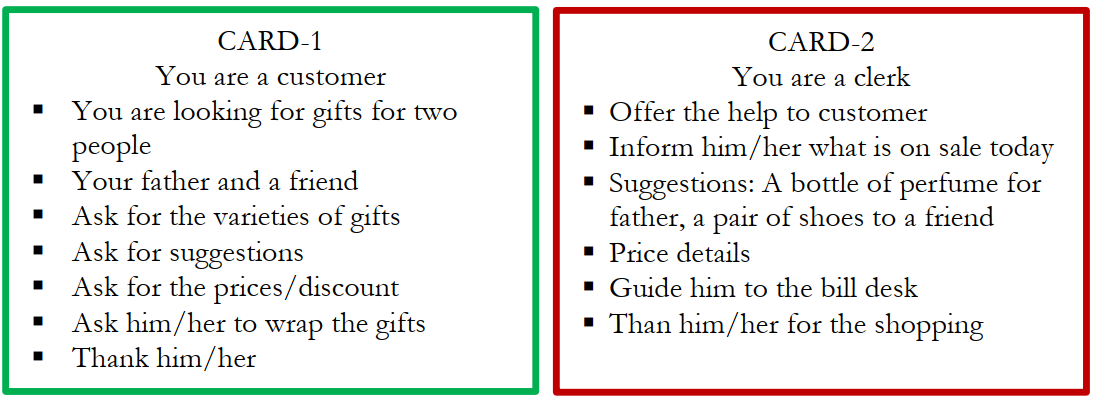
Speaking proficiency in the vocational high school context is often hindered by a range of challenges. Learners frequently experience anxiety, possess limited vocabulary, encounter difficulties in collaborative interaction, and demonstrate reluctance to speak in front of their peers. Consequently, students provide minimal verbal responses due to concerns about making errors or facing negative evaluation. This study aims to compare the effectiveness of task-based role-playing (TBRP) and cooperative role-playing (CRP) in improving students’ speaking skills. A quasi-experimental design was employed involving 69 eleventh-grade students from a tourism service program at a vocational high school in Yogyakarta. The participants were divided into an experimental group TBRP and a control group CRP. Data were collected through pretest and posttest assessments and analyzed using the Mann-Whitney U test in SPSS version 22 due to non-normal data distribution. The results revealed a statistically significant difference between the two groups (p<0.05), indicating that students taught through TBRP achieved greater improvement in speaking performance compared to those instructed using CRP. The results imply that task-based role-playing, which emphasizes meaningful tasks, contextual language use, and active learner engagement, is more effective in fostering communicative competence. Additionally, the results may not be as applicable to larger educational environments or other vocational programs due to the relatively small sample size and its confinement to a vocational high school. Future research is recommended to use more rigorous designs, such as randomized controlled trials, and to use a bigger and more varied sample to enhance the robustness and generalizability of the findings.
References
Abdulla, M. D., Lakshmi, K. P., Zada, M., & Mahammad, I. (2023). Role-play: An interactive activity to enhance the English-speaking skills of undergraduate students. Tuijin Jishu/Journal of Propulsion Technology, 44(4), 1001–4055. Retrieved from https://www.propulsiontechjournal.com/index.php/journal/article/view/1782
Akanbi, A. O., Mohammed, R. E., Yusuf, A. A., & Olayinka, Y. W. (2022). Effects of hands-on instructional strategy on senior school students’ performance in waves. Journal of Education and Learning (EduLearn), 16(3), 366–374. https://doi.org/10.11591/edulearn.v16i3.20320
Anagnostopoulou, A., Hummel, H. G. K., & Martens, R. (2023). Authenticity of tasks in online ESL/EFL learning to foster transfer. Cogent Education, 10(1). https://doi.org/10.1080/2331186X.2023.2190429
Angelica, F. V., & Wulandari, F. (2025). The use of role-play in enhancing students’ confidence in speaking. ELSA Journal, 6(1), 21–29. https://doi.org/10.63848/elsa.v06n1.3
Anshar, A., Ariyani, A., & Fauzan, M. M. (2024). Reducing students’ anxiety in speaking English through cooperative learning (Make a match type). Journal of Excellence in English Language Education, 3(4). Retrieved from https://ojs.unm.ac.id/JoEELE/article/view/67090
Bijani, H., Hashempour, B., Ibrahim, K. A. A. Al, Orabah, S. S. B., & Heydarnejad, T. (2022). Investigating the effect of classroom-based feedback on speaking assessment: A multifaceted Rasch analysis. Language Testing in Asia, 12(1). https://doi.org/10.1186/s40468-022-00176-3
Brown, D. H. (2004). Teaching by principles: An interactive approach to language pedagogy. Longman
Christianty, T. P., & Tauran, S. G. A. (2026). Grammar mastery and speaking ability among tenth-grade students. Sumikolah: Jurnal Ilmu Pendidikan, 4(1), 34–41. https://doi.org/10.31154/sjip.v4i1.1522.34-41
Chunliu, X., & Guangsheng, L. (2025). The effectiveness of task-based language teaching in improving communicative competence. International Journal of Advanced and Applied Sciences, 12(1), 263–273. https://doi.org/10.21833/ijaas.2025.01.025
Creswell, J. W., & Creswell, J. D. (2018). Research design: Qualitative, quantitative, and mixed methods approaches. Sage Publication Inc.
Cuesta, P. V. N., & Fernández, A. M. (2022). The effectiveness of task-based language teaching on the writing skill: A systematic research synthesis. Ciencia Digital, 6(1), 27–46. https://doi.org/10.33262/cienciadigital.v6i1.1953
Doğantan, E. (2020). An interactive instruction model design with role play technique in distance education: A case study in open education system. Journal of Hospitality, Leisure, Sport and Tourism Education, 27(2020). https://doi.org/10.1016/j.jhlste.2020.100268
East, M. (2023). Foundational principles of task-based language teaching. Studies in Second Language Learning and Teaching, 13(3). https://doi.org/10.14746/ssllt.38285
Ellis, R. (2003). Designing a task-based syllabus. RELC Journal, 34(1), 64–81. https://doi.org/10.1177/003368820303400105
Ellis, R., Skehan, P., Li, S., Shintani, N., & Lambert, C. (2020). Task-based language teaching: Theory and practice. Cambridge University Press
Eppendi, J. (2016). Teaching speaking by using role play to the eighth grades of state junior high School 15 Palembang. Jambi-English Language Teaching Journal, 1(2), 98–104. Retrieved from https://online-journal.unja.ac.id/jelt/en/article/view/3435
Fiani, A., & Nahak, M. M. I. (2025). The implementation of role play technique to enhance EFL students’ speaking skill. Journal of English Education Literature and Linguistics, 8(1), 23–35. Retrieved from https://ojs.stkippgri-lubuklinggau.ac.id/index.php/JEELL/article/view/3574
Ghasemi, A., & Zahediasl, S. (2012). Normality tests for statistical analysis: A guide for non-statisticians. International Journal of Endocrinology and Metabolism, 10(2), 486–489. https://doi.org/10.5812/ijem.3505
Gillies, R. M. (2016). Cooperative learning: Review of research and practice. Australian Journal of Teacher Education, 41(3), 39–54. https://doi.org/10.14221/ajte.2016v41n3.3
Gillies, R. M. (2023). Promoting dialogic talk during cooperative learning. Contemporary Global Perspectives on Cooperative Learning: Applications Across Educational Contexts, 197–207. https://doi.org/10.4324/9781003268192-19
Guo, T., Hashim, H., & Ismail, H. H. (2026). Effectiveness of task-based language teaching (TBLT) in English speaking instruction: A systematic review. International Journal of Learning, Teaching and Educational Research, 25(2), 173–195. https://doi.org/10.26803/ijlter.25.2.9
Ha, T. Y. N., Nguyen, T. B. N., Nguyen, N. L. D., & Tran, T. N. (2022). Effects of collaborative learning on young ESL learners’ L2 anxiety and speaking performance. International Journal of Asian Education, 3(2), 109–121. https://doi.org/10.46966/ijae.v3i2.286
Ha, T. Y. N., Nguyen, T. B. N., Nguyen, N. L. D., & Tran, T. N. (2022). Effects of collaborative learning on young ESL learners’ L2 anxiety and speaking performance. International Journal of Asian Education, 3(2), 109–121. https://doi.org/10.46966/ijae.v3i2.286
Lahbibi, K., & Farhane, H. (2023). Impact of role play on enhancing learners’ interaction in speaking. International Journal of Language and Literary Studies, 5(1), 28–51. https://doi.org/10.36892/ijlls.v5i1.1155
Lestari, S. D., Mobit, M., & Samsi, Y. S. (2025). Exploring students’ experience in learning speaking through task-based language teaching: A case study in vocational high school. Journal of Educational Sciences, 9(6), 5563–5574. Retrieved from https://jes.ejournal.unri.ac.id/index.php/JES/article/view/934
Li, J., Huang, J., & Cheng, S. (2022). The reliability, effectiveness, and benefits of peer assessment in college EFL speaking classrooms: Student and teacher perspectives. Studies in Educational Evaluation, 72, 101120. https://doi.org/10.1016/j.stueduc.2021.101120
Limgomolvilas, S., & Sukserm, P. (2025). Examining rater reliability when using an analytical rubric for oral presentation assessments. LEARN Journal: Language Education and Acquisition Research Network, 18(1), 110–134. https://doi.org/10.70730/JQGY9980
Lisa, A., Yulianita, N. G., & Fitriana, R. (2025). A role-play-based pedagogical model for improving EFL students’ speaking readiness in professional contexts. J-SHMIC: Journal of English for Academic, 12(2), 148–162. https://doi.org/10.25299/jshmic.2025.vol12(2).23981
Maldin, S. A., & Sianipar, B. (2025). Role play to alleviate speaking anxiety: Action research in ESP class of Batam Tourism Polytechnic. Cahaya Pendidikan, 11(1), 43–55. https://doi.org/10.33373/chypend.v11i1.7746
Maulana, I., & Lolita, Y. (2023). The effectiveness of role-play to improve student’s speaking achievement. Elite Journal: International Journal of Education, Language and Literature, 3(2), 122–135. https://doi.org/10.26740/elitejournal.v3n2.p122-135
Mawaddah, A. N. (2025). Task-based language teaching for workplace-oriented speaking in vocational education: A qualitative case study. International Journal of Research on English Teaching and Applied Linguistics, 6(2), 72–83. https://doi.org/10.30863/ijretal.v6i2.11106
Meilasari, T. A., Rofi’i, A., Kustini, T., & Herdiawan, R. D. (2023). Integrating cooperative learning in EFL classroom to alleviate students’ speaking (fluency) anxiety. Ijlecr - International Journal of Language Education and Culture Review, 9(2), 1–11. https://doi.org/10.21009/ijlecr.v9i2.37859
Mulyanah, E. Y., Ishak, I., & Dewi, R. K. (2018). The effect of communicative language teaching on students speaking skill. CICES (Cyberpreneurship Innovative and Creative Exact and Social Science), 4(1), 67–75. https://doi.org/10.33050/cices.v4i1.478
Nan, C. (2018). Implications of interrelationship among four language skills for high school English teaching. Journal of Language Teaching and Research, 9(2), 418–423. https://doi.org/10.17507/jltr.0902.26
Nayak, G., & Patel, P. (2023). Developing speaking skills through task-based learning in English as a foreign language classroom. The Scientific Temper, 15(04), 3447–3452. Retrieved from https://www.researchgate.net/publication/388124436_Developing_speaking_skills_through_task-based_learning_in_English_as_a_foreign_language_classroom
Nunan, D. (2003). Practical English language teaching (International ed.). McGraw-Hill.
Prabhu, N. S. (2004). The task-based approach in language teaching. International Journal of English Studies, 4, 39–71. Retrieved from https://www.researchgate.net/publication/228832926 The Task Based Approach in Language Teaching
Rahmawati, I. (2025). Improving elementary students’ speaking skills through contextual learning and folktale-based role play. International Journal of Javanese Studies, 9(1), 94–105. Retrieved from https://jurnal.uns.ac.id/javanologi/article/view/111825
Sarabi Asl, S., Rashtchi, M., & Rezaie, G. (2024). The effects of interactionist versus interventionist dynamic assessment models on Iranian EFL learners’ speaking sub-skills: a mixed-method study. Asian-Pacific Journal of Second and Foreign Language Education, 9(1). https://doi.org/10.1186/s40862-023-00237-x
Sari, E., Agustina, E., & Muklas, M. (2025). The optimization of English teaching with the task-based language teaching method to improve speaking ability for eleventh grade students. Jurnal Pengabdian Masyarakat dan Riset Pendidikan, 4(2), 7972–7974. Retrieved from https://jerkin.org/index.php/jerkin/article/view/3133
Sato, M., & Ballinger, S. (2016). Peer interaction and second language learning: Pedagogical potential and research agenda. Language Learning & Language Teaching, 45. https://benjamins.com/catalog/lllt.45
Slavin, R. E. (1980). Cooperative Learning. In Review of Educational Research (Vol. 50, Issue 2). https://doi.org/10.3102/00346543050002315
Suciati, S., & Nur’aini, E. (2026). Investigating the relationship between vocabulary mastery and students’ reading comprehension in vocational high school. SAGA: Journal of English Language Teaching and Applied Linguistics, 7(1), 15–27. https://doi.org/10.21460/saga.2026.71.255
Sureeyatanapas, P., Sureeyatanapas, P., Panitanarak, U., Kraisriwattana, J., Sarootyanapat, P., & O’Connell, D. (2024). The analysis of marking reliability through the approach of gauge repeatability and reproducibility (GR&R) study: a case of English-speaking test. Language Testing in Asia, 14(1), 1–28. https://doi.org/10.1186/s40468-023-00271-z
Şimşek, A. S. (2023). The power and type I error of Wilcoxon-Mann-Whitney, Welch’s t, and Student’s t tests for Likert-type data. International Journal of Assessment Tools in Education, 10(1), 114–128. https://doi.org/10.21449/ijate.1183622
Downloads
Published
How to Cite
Issue
Section
License
Copyright (c) 2026 Sri Wiyanah, Della Aprilia Safira, Mohammad Iskandar Dzulkurnain

This work is licensed under a Creative Commons Attribution 4.0 International License.
Authors who publish this journal agree to the following terms:
- Authors retain copyright and grant the journal right of first publication with the work simultaneously licensed under a Creative Commons Attribution License that allows others to share the work with an acknowledgement of the work's authorship and initial publication in this journal.
- Authors can separately make additional contractual arrangements for non-exclusive distribution published by the journal (e.g., publish it in a book), with an acknowledgement of its initial publication in this journal.
- Authors are allowed and encouraged to send their work via online (e.g., in the institutional repositories or their website) after published by the journal.