Improvement in elementary students’ mathematical problem-solving abilities through contextual teaching and learning supported by Geoboard media
DOI:
https://doi.org/10.33474/jpm.v12i2.25751Keywords:
Contextual Teaching and Learning, Geoboard, Mathematical Problem-solving , Mathematics LearningAbstract
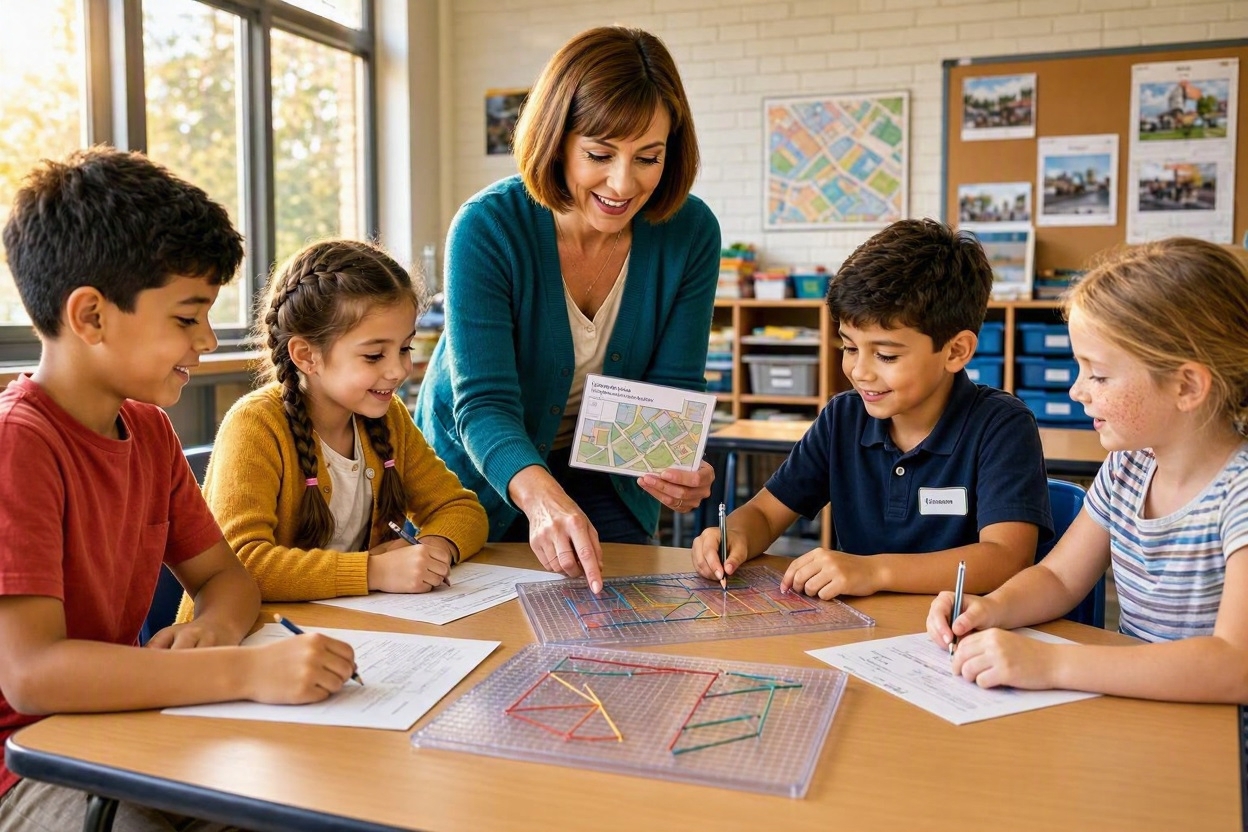
Mathematical problem-solving ability is a crucial competency in elementary school mathematics education. However, low levels of learning activity and a lack of instructional variety remain challenges in developing this ability, particularly regarding the topic of 2-dimensional (2D) shapes. This study aimed to analyze changes in students' mathematical problem-solving abilities following instruction using the Contextual Teaching and Learning (CTL) approach assisted by geoboards, and to examine the relationship between learning activity and mathematical problem-solving scores. A quantitative approach was employed using a pre-experimental one-group pretest-posttest design. The study subjects consisted of 40 fourth-grade students from primary school (SD) 5 Ngabul. Data were collected using a mathematical problem-solving test based on Polya’s stages and an observation sheet for student learning activity. Data analysis was conducted using the Paired Sample T-test and simple linear regression. The results showed an increase in the average mathematical problem-solving score from 41.85 to 70.13 following the instruction. Furthermore, student learning activity showed a positive relationship with posttest scores, with a coefficient of determination of 56.1% for the study sample. The findings indicate that CTL instruction assisted by geoboards serves as a viable alternative teaching method to foster student engagement and the development of mathematical problem-solving skills.
References
Ardi, I. M. M., Azeka, A. U., & Zuliana, E. (2025). Analisis pemecahan masalah matematis siswa berdasarkan teori Polya pada materi domain data [Analysis of students' mathematical problem-solving based on Polya's theory regarding the data domain]. JagoMIPA: Jurnal Pendidikan Matematika dan IPA, 5(4), 1348–1362. https://doi.org/10.53299/jagomipa.v5i4.2232
Asri, A., Kurniati, N., Triutami, T. W., & Turmuzi, M. (2023). Analisis kemampuan pemecahan masalah pada soal cerita matematika materi Sistem Persamaan Linier Dua Variabel (SPLDV) ditinjau dari minat belajar siswa kelas VIII SMPN 1 Masbagik tahun Ajaran 2022/2023 [An analysis of problem-solving abilities regarding mathematical word problems on the topic of Systems of Linear Equations in Two Variables (SPLDV), examined in relation to the learning interest of grade VIII students at SMPN 1 Masbagik during the 2022/2023 academic year. Jurnal Ilmiah Profesi Pendidikan, 8(1), 742–751. https://doi.org/10.29303/jipp.v8i1b.1305
Cahyani, V. D., & Pranata, O. D. (2023). A Study of Students' Science Learning Activities at SMA Negeri 7 Kerinci. Lensa (Lentera Sains): Jurnal Pendidikan IPA, 13(2), 137–148. https://www.jurnallensa.web.id/index.php/lensa/article/view/317
Destiara, D., Handayani, H., & Setiawati, T. (2023). The effect of the Realistic Mathematics Education (RME) learning approach assisted by geoboards on students' mathematical problem-solving abilities regarding the perimeter and area of squares and rectangles. Sebelas April Elementary Education (SAEE), 2(3), 263–273. https://ejournal.unsap.ac.id/index.php/saee/article/view/1040
Endry, R. Z., Septiarini, D. A. P., & Zuliana, E. (2025). Pembelajaran pecahan dengan pendekatan PMRI berbantu media pizza di SDN 1 Ngembal [Fraction learning using the PMRI approach assisted by pizza media at SDN 1 Ngembal. Al-Ihda’ : Jurnal Pendidikan Dan Pemikiran, 20(1), 1727–1735. https://jurnal-stainurulfalahairmolek.ac.id/
index.php/ojs/article/view/213
Ester, K., Sakka, F. S., Mamonto, F., & Anthonieta, E. M. (2023). The Contextual Teaching and Learning (CTL) instructional model at SD GMIM II Sarongsong. Jurnal Ilmiah Wahana Pendidikan, 9(20), 967–973. https://doi.org/10.5281/zenodo.10421051
Ghozali, I., & Kusumadewi, K. A. (2023). Smart PLS (A. Heri (ed.); 1st ed.). Yoga Pratama.
Hasanah, U., Soeprianto, H., Triutami, T. W., & Hayati, L. (2024). Analysis of mathematical problem-solving ability viewed from students' mathematics learning motivation. Mandalika Mathematics and Education Journal, 6(1), 230–246. https://doi.org/10.31949/educatio.v10i4.8790
Hidayah, S., H., Triutami, T. W., & Hayati, L. (2024). Analisis Kemampuan Pemecahan Masalah Matematis Ditinjau dari Motivasi Belajar Matematika Siswa [Analysis of mathematical problem-solving ability viewed from students' mathematics learning motivation]. Mandalika Mathematics and Education Journal, 6(1), 230–246. https://doi.org/10.29303/jm.v6i1.6977
Indriani, E. T., Sholikhah, O. H., & Marlina, D. (2023). The effect of the Contextual Teaching and Learning (CTL) model assisted by puzzle media on the thematic problem-solving skills of elementary school students. Prosiding Konferensi Ilmiah Dasar, 4, 544–549. https://jptam.org/index.php/jptam/article/view/12259/
Juita, N., Zahrah, R. F., & Febriani, W. D. (2023). Meningkatkan Pemecahan Masalah Matematika Operasi Pembagian Dengan Menggunakan Contextual Teaching and Learning [Improving mathematical problem-solving in division operations using contextual teaching and learning]. JLEB: Journal of Law Education and Business, 1(2), 120–131. https://doi.org/10.57235/jleb.v1i2.1071
Mufidah, A., Ramadianti, A. A., & Hariati, E. (2024). Pengaruh pembelajaran geoboard terhadap hasil belajar siswa pada pembelajaran matematika kelas V SDN 101746 Klumpang Kebun tahun ajaran 2023/2024 [The effect of geoboard-based instruction on student learning outcomes in mathematics for grade V at SDN 101746 Klumpang Kebun during the 2023/2024 academic year]. Pentagon: Jurnal Matematika dan Ilmu Pengetahuan Alam, 2(3), 83–98. https://doi.org/10.62383/pentagon.v2i3.231
Muhartini, Mansur, A., & Bakar, A. (2023). Contextual learning and problem-based learning. Lencana: Jurnal Inovasi Ilmu Pendidikan, 1(1), 66–77. https://doi.org/10.55606/lencana.v1i1.881
Muslihah, N. N., & Suryaningrat, E. F. (2021). Model pembelajaran contextual teaching and learning terhadap kemampuan pemecahan masalah matematis [The effect of the contextual teaching and learning model on mathematical problem-solving ability]. Jurnal Pendidikan Matematika, 1(3), 553–564. https://doi.org/10.31980/plusminus.v1i3.963
Novika, R. T., Isnaniah, & Imamuddin, M. (2023). Aktivitas belajar dan kemampuan pemecahan masalah matematika dengan menggunakan model Means End Analysis (MEA) pada siswa kelas VIII MTsN 6 Agam tahun pelajaran 2022/2023 [Learning activities and mathematical problem-solving skills using the Means-End Analysis (MEA) model among grade VIII students at MTsN 6 Agam during the 2022/2023 academic year]. SICEDU: Science and Education Journal, 2(1), 222–230. https://doi.org/10.31004/sicedu.v2i1.104
Nurhanipah, Huda, A. N., Sari, A. S., Subarna, I. C., Hanifah, N., Saputra, R., & Khairunnina, A. (2025). Model pembelajaran Contextual Teaching and Learning (CTL) sebagai upaya untuk meningkatkan hasil belajar peserta didik [The Contextual Teaching and Learning (CTL) model as an effort to improve students' learning outcomes]. Jurnal Riset Ilmiah, 2(7), 2993–3002. https://doi.org/10.62335/sinergi.v2i7.1469
Nurjehan, R., Ansari, K., & Yusnadi. (2024). Teacher perspective: implementation of contextual teaching and learning model. Jurnal Teknologi Pendidikan, 26(1), 260–269. https://doi.org/10.21009/jtp.v26i1.44084
Ramadhani, S. P., Pratiwi, F. M., Fajriah, Z. H., & Susilo, B. E. (2024). Literature review: the effectiveness of the Problem-Based Learning (PBL) model in enhancing mathematical problem-solving skills in mathematics learning. PRISMA: Prosiding Seminar Nasional Matematika, 7, 724–730. https://proceeding.unnes.ac.id/prisma/article/view/3023/248
Ramandani, R., Zuliana, E., & Santoso, A. (2026). Identification of the types and causes of errors made by grade 2 students at SDN Karangwage 02 in solving whole number subtraction problems. ANARGYA: Jurnal Ilmiah Pendidikan Matematika, 9(1), 31–49. https://jurnal.umk.ac.id/index.php/anargya/article/view/16860/
Rimalita, H., N., & Mariyam. (2023). Pengaruh model problem based learning dan problem posing terhadap kemampuan pemecahan masalah matematis siswa [The effect of problem-based learning and problem-posing models on students' mathematical problem-solving abilities. Jurnal Kajian Pendidikan Matematika, 2682(1), 139–148. http://dx.doi.org/10.30998/jkpm.v9i1.20482
Sarwari, K., & Kakar, A. F. (2023). Developing students’ critical thinking skills through contextual teaching and learning. Journal of Cognition, Emotion, and Education, 1(1), 29–42. https://doi.org/10.22034/cee.2023.172192
Hidayah, S., Farizal, M., Sholiha, M., & Khairi, A. K. U. (2024). Analysis of students' mathematical problem-solving abilities based on gender differences. Algoritma: Jurnal Matematika, Ilmu Pengetahuan Alam, Kebumian dan Angkasa, 2(5), 139–154. https://doi.org/10.62383/algoritma.v2i5.178
Sugiyono. (2019). Quantitative, qualitative, and R&D research methods (Sutopo (ed.); 1st ed.). Alfabeta.
Telaumbanua, M. R., Sanjaya, G., & Lutfiyani. (2025). Implementation of islamic religious education learning using the Contextual Teaching and Learning (CTL) model. Al-Tazkiyah: International Journal of Islamic Education, 1(2), 18–32. https://jurnal.penerbitafasapustaka.com/index.php/altazkiyah/article/view/213
Wahyuni, A., Kusumah, Y. S., Martadiputra, B. A. P., & Zafrullah. (2024). Tren penelitian kemampuan pemecahan masalah pada pendidikan matematika: Analisis bibliometrik [Research trends on problem-solving skills in mathematics education: a bibliometric analysis]. Jurnal Pembelajaran Matematika Inovatif, 7(2), 337–356. https://doi.org/10.22460/jpmi.v7i2.22329
Yoyana, S., & Supriansyah. (2025). Pengaruh penggunaan media geoboard terhadap hasil belajar matematika siswa pada materi bangun datar [The effect of using geoboard media on students' mathematics learning outcomes regarding 2D shapes]. Jurnal Pendidikan Matematika dan Sains, 13(2), 360–368. https://doi.org/10.21831/jpms.v13i2.87825
Zakiyah, M., & Noor, L. N. (2022). The influence of prior knowledge and learning independence on mathematical problem-solving ability. NCOINS: National Conference of Islamic Natural Science, 2(1), 54–65. https://proceeding.uinsuku.ac.id/index.php/NCOINS/article/view/336
Zuliana, E. (2023). The geometrical patterns and philosophical value of javanese traditional mosque architecture for mathematics learning in primary school: An ethnomathematic study. Journal of Education Culture and Society, 2(1), 512–532. https://doi.org/10.15503/jecs2023.2.512.532
Zuliana, E., Fauzi, L. M., & Nugroho, F. A. W. (2026). Designing a learning trajectory for cube nets using the engklek game: An educational design research study within realistic mathematics education. Jurnal Elemen, 12(1), 158–181. https://doi.org/10.29408/jel.v12i1.32583
Downloads
Published
How to Cite
Issue
Section
License
Copyright (c) 2026 Risma Avillyana Putri Risma, Eka Zuliana Eka, Denni Agung Santoso

This work is licensed under a Creative Commons Attribution 4.0 International License.

_-_Copy.jpg)
.jpg)
.jpg)
.jpg)