Exploring senior high school students’ perceptions of artificial intelligence as a mathematics learning assistant
DOI:
https://doi.org/10.33474/jpm.v12i2.25877Keywords:
Artificial Intelligence, Students’ Perceptions, Mathematics Learning, Learning AssistantAbstract
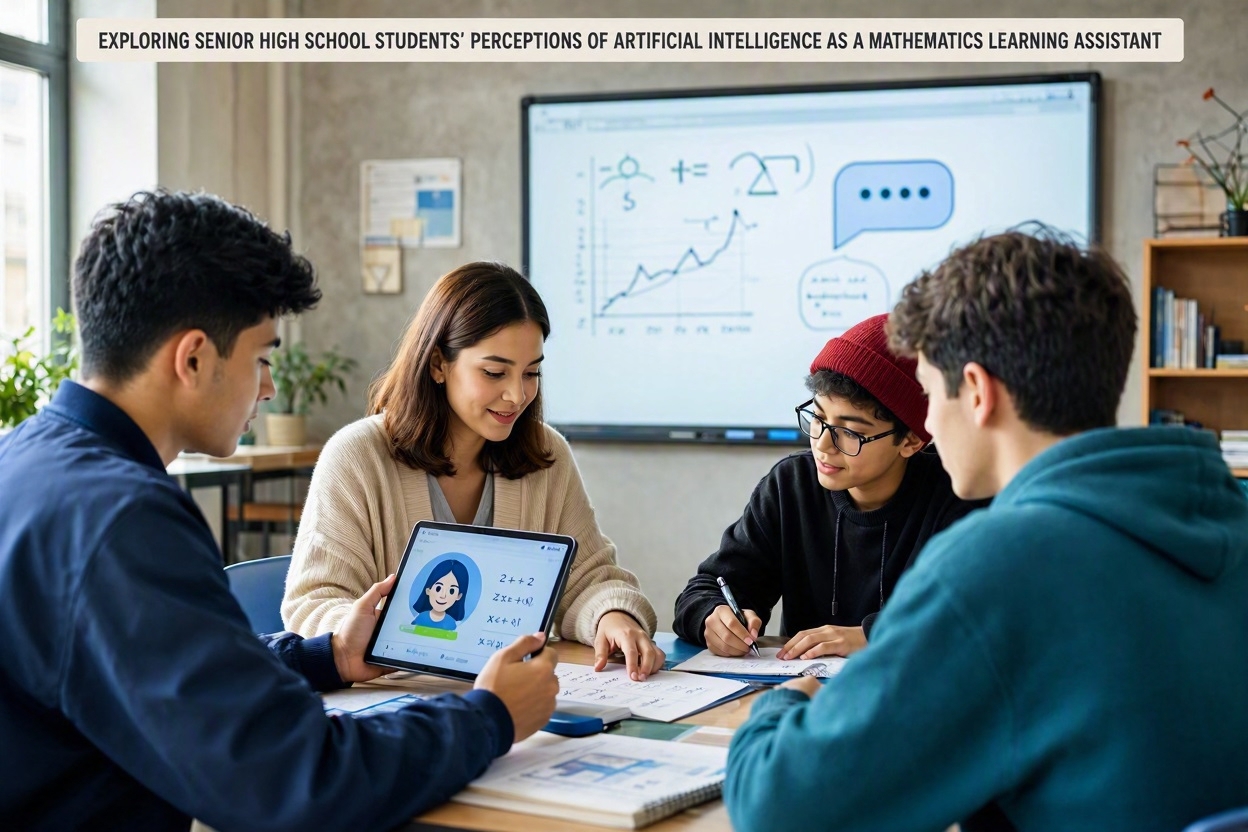
The development of Artificial Intelligence (AI) has presented various opportunities in education, including as a learning assistant in mathematics. This study aims to determine students' perceptions of the use of AI as a learning assistant, identify the forms of AI utilization in mathematics learning, and assess the risks and limitations of its use. This study employed a descriptive qualitative approach. Questionnaire responses from 31 students were used to provide an initial description of students' perceptions. In comparison, semi-structured interviews with five selected students were conducted to obtain in-depth qualitative data at Public Senior High School (SMA Negeri) 7 Kediri. Data were collected through questionnaires and semi-structured interviews, then analyzed using thematic analysis. The results showed that students had a positive perception of the use of AI in mathematics learning. AI is used primarily to help understand material, obtain additional explanations, and solve math problems. However, students still rely more on teachers and other learning resources to understand mathematical concepts in depth. This study also found that students are aware of the risks of using AI, such as potential dependency, reduced self-study efforts, and decreased independent thinking skills if used excessively. Furthermore, nearly all students believed that AI cannot replace the role of teachers in learning. These findings indicate that students perceive AI as a potentially useful learning assistant for mathematics learning when its use is guided by teachers and accompanied by critical evaluation of AI-generated information.
References
Brauner, P., Glawe, F., Liehner, G. L., Vervier, L., & Ziefle, M. (2025). Mapping public perception of artificial intelligence: Expectations, risk–benefit tradeoffs, and value as determinants for societal acceptance. Technological Forecasting and Social Change, 220, 124304. https://doi.org/10.1016/j.techfore.2025.124304
Chai, C. S., Wang, X., & Xu, C. (2020). An extended theory of planned behaviour for the modelling of Chinese secondary school students’ intention to learn artificial intelligence. Mathematics, 8(11), 2089. https://doi.org/10.3390/math8112089
Chugh, R., Turnbull, D., Kutty, S., Sabrina, F., Rashid, M. M., Morshed, A., Azad, S., Kaisar, S., & Subramani, S. (2025). Generative AI as a learning assistant in ICT education: Student perspectives and educational implications. Education and Information Technologies, 30(6), 23693–23728. https://doi.org/10.1007/s10639-025-13686-3
Crisol-Moya, E., Gámiz-Sánchez, V. M., Checa-Domene, L., & Romero-López, M. A. (2026). Student perception of the use of artificial intelligence (AI) tools in academic tasks: Construction and validation of the PEHIA-TA. Education Sciences, 16(4), 591. https://doi.org/10.3390/educsci16040591
Davis, F. D. (1989). Perceived usefulness, perceived ease of use, and user acceptance of information technology. MIS Quarterly, 13(3), 319–340. https://doi.org/10.2307/249008
Eriana, E. S., & Zein, A. (2023). Artificial intelligence (AI) (1st ed.). CV. Eureka Media Aksara. https://penerbiteureka.com/2023/12/04/artificial-intelligence-ai/
Fortuna, A., Prasetya, F., Samala, A. D., Rawas, S., Criollo-C, S., Kaya, D., Raihan, M., Andriani, W., & Safitri, D. (2025). Artificial intelligence in personalized learning: A global systematic review of current advancements and shaping future opportunities. Social Sciences & Humanities Open, 12, 102114. https://doi.org/10.1016/j.ssaho.2025.102114
Haleem, A., Javaid, M., Qadri, M. A., & Suman, R. (2022). Understanding the role of digital technologies in education: A review. Sustainable Operations and Computers, 3, 275–285. https://doi.org/10.1016/j.susoc.2022.05.004
Hassen, M. Z. (2025). The impact of AI on students’ reading, critical thinking, and problem-solving skills. American Journal of Education and Information Technology, 9(2), 82–90. https://doi.org/10.11648/j.ajeit.20250902.12
Holmes, W., & Tuomi, I. (2022). State of the art and practice in AI in education. European Journal of Education, 57(4), 542–570. https://doi.org/10.1111/ejed.12533
Kasneci, E., Sessler, K., Kuchemann, S., Bannert, M., Dementieve, D., Fischer, F., Gasser, U., Groh, G., Gunnemann, S., Hullermeier, E., Stefan, K., Kutyniok, G., Michaeli, T., Nerdel, C., Pfeffer, J., Poquet, O., Sailer, M., Schmidt, A., & Seidel, T. (2023). ChatGPT for good? On opportunities and challenges of large language models for education. Learning and Individual Differences, 103, 102274. https://doi.org/10.1016/j.lindif.2023.102274
Krisdianto, J., & Roesdiana, L. (2024). Eksplorasi persepsi siswa terhadap penggunaan AI dalam meningkatkan pemahaman konsep matematis pada siswa SMP [Exploration of students' perceptions of the use of AI in improving understanding of mathematical concepts in junior high school students]. Pedagogy: Jurnal Pendidikan Matematika, 10(4), 2653–2666. https://doi.org/10.30605/pedagogy.v10i4.7659
Li, Z., Yi, W., & Chen, J. (2026). Accuracy paradox: Addressing epistemic, manipulative, and societal risks of hallucination in AI governance. Computer Law & Security Review: The International Journal of Technology Law and Practice, 61, 106311. https://doi.org/10.1016/j.clsr.2026.106311
Long, D., & Magerko, B. (2020). What is AI literacy? Competencies and design considerations. Proceedings of the 2020 CHI Conference on Human Factors in Computing Systems, 1–16. https://doi.org/10.1145/3313831.3376727
Luckin, R., Holmes, W., Griffiths, M., & Forcier, L. B. (2016). Intelligence unleashed: An argument for AI in education. Pearson. https://discovery.ucl.ac.uk/id/eprint/1475756/
Madanchian, M., Drazenovic, G., Ravan, S., & Taherdoost, H. (2025). Integrating AI tools to enhance learning outcomes in modern education systems. Procedia Computer Science, 263, 514–521. https://doi.org/10.1016/j.procs.2025.07.062
Manto, A., Visitacion, M. A., Yee, A. M., Roble, J., Capuyan, S. N., Hermoso, F., Milano, M. L., Gonzales, R., Hallarte, D. K., & Gonzales, G. (2026). AI integration in mathematics education: A systematic review of implementation challenges and pedagogical implications (2017-2025). Social Sciences & Humanities Open, 14, 103147. https://doi.org/10.1016/j.ssaho.2026.103147
Maryati, I., Harun, M., Gumilar, S., & Rahayu, A. P. (2026). Adaptive learning and generative AI in mathematics teacher education: A systematic review. International Journal of Review in Mathematics Education, 1(1), 24–51. https://doi.org/10.23917/ijrime.15936
Miles, M. B., Huberman, A. M., & Saldaña, J. (2014). Qualitative data analysis: A methods sourcebook (3rd ed.). SAGE.
Nujum, N., & Hadi, M. S. (2025). Pengaruh pembelajaran berbasis masalah berbantuan media AI terhadap peningkatan keterampilan berpikir kritis siswa di sekolah dasar [The effect of AI-media-assisted problem-based learning on improving students' critical thinking skills in elementary school]. JIIP (Jurnal Ilmiah Ilmu Pendidikan), 8(2), 1333–1341. https://doi.org/10.54371/jiip.v8i2.6870
Opesemowo, O. A. G., & Ndlovu, M. (2024). Artificial intelligence in mathematics education: The good, the bad, and the ugly. Journal of Pedagogical Research, 8(3), 333–346. https://doi.org/10.33902/JPR.202426428
Owoc, M. L., Sawicka, A., & Weichbroth, P. (2021). Artificial intelligence technologies in education: Benefits, challenges and strategies of implementation. In IFIP Advances in Information and Communication Technology (Vol. 599, pp. 37–58). Springer. https://doi.org/10.1007/978-3-030-85001-2_4
Piaget, J. (1977). The development of thought: Equilibration of cognitive structures (A. Rosin, Trans.). Viking Press.
Risko, E. F., & Gilbert, S. J. (2016). Cognitive offloading. Trends in Cognitive Sciences, 20(9), 676–688. https://doi.org/10.1016/j.tics.2016.07.002
Salido, A., Syarif, I., Sari, M., Rias, P., Taufika, R., & Melisa, R. (2025). Integrating critical thinking and artificial intelligence in higher education: A bibliometric and systematic review of skills and strategies. Social Sciences & Humanities Open, 12, 101924. https://doi.org/10.1016/j.ssaho.2025.101924
Schmidt, D. A., Alboloushi, B., Thomas, A., & Magalhaes, R. (2025). Integrating artificial intelligence in higher education: Perceptions, challenges, and strategies for academic innovation. Computers and Education Open, 9, 100274. https://doi.org/10.1016/j.caeo.2025.100274
Setiyanti, A. A., & Pipa, S. (2025). Implikasi ketergantungan siswa terhadap penggunaan ChatGPT sebagai alat bantu pembelajaran dalam pendidikan di era digital [Implications of students' dependence on the use of ChatGPT as a learning tool in education in the digital era]. JIIP (Jurnal Ilmiah Ilmu Pendidikan), 8(3), 3481–3487. https://doi.org/10.54371/jiip.v8i3.7527
Setyawan, A., Sholiha, E. Z., & Aulia, H. M. Z. (2025). Dampak negatif ketergantungan berlebihan pada artificial intelligence (AI) terhadap kemampuan berpikir kritis dan pemecahan masalah siswa sekolah menengah [The negative impact of overreliance on artificial intelligence (AI) on high school students' critical thinking and problem-solving skills]. Jurnal Ilmu Sosial , Ekonomi Dan Pendidikan, 1(2), 31–44. https://doi.org/10.67467/jisep.v1i2.40
Shoufan, A. (2023). Exploring students’ perceptions of ChatGPT: Thematic analysis and follow-up survey. IEEE Access, 11, 38805–38818. https://doi.org/10.1109/ACCESS.2023.3268224
Sousa, A. E., & Cardoso, P. (2025). Use of generative AI by higher education students. Electronics, 14(7), 1258. https://doi.org/10.3390/electronics14071258
Srianti, Adrias, & Zulkarnaini, A. P. (2025). Penerapan artificial intelligence dalam menunjang pemahaman matematika siswa sekolah dasar [The application of artificial intelligence in supporting elementary school students' mathematical understanding]. Pendas : Jurnal Ilmiah Pendidikan Dasar, 10(2), 256–271. https://doi.org/10.23969/jp.v10i2.23878
Subakti, H., Hurit, R. U., & Eni, G. D. (2023). Metodologi penelitian kualitatif [Qualitative research methodology] (1st ed.). CV. Media Sains Indonesia.
Sugiono, S. (2024). Proses adopsi teknologi generative artificial intelligence dalam dunia pendidikan: Perspektif teori difusi inovasi. Jurnal Pendidikan Dan Kebudayaan, 9(1). https://doi.org/10.24832/jpnk.v9i1.4859
Sugiyono. (2020). Metode penelitian kuantitatif, kualitatif, dan R&D [Quantitative, qualitative, and R&D research methods] (2nd ed.). Alfabeta.
Sun, Y., Sheng, D., Zhou, Z., & Wu, Y. (2024). AI hallucination: Towards a comprehensive classification of distorted information in artificial intelligence-generated content. Humanities and Social Sciences Communications, 11, 1278. https://doi.org/10.1057/s41599-024-03811-x
Supriyono, A., & Prihandono, T. (2024). Dampak dan tantangan pemanfaatan ChatGPT dalam pembelajaran pada kurikulum merdeka: Tinjauan literatur sistematis [Impact and challenges of the use of ChatGPT in learning on independent curriculum: A systematic literature review]. Jurnal Pendidikan Dan Kebudayaan, 9(2), 9–12. https://doi.org/10.24832/jpnk.v9i2.5214
Suryawijaya, M. R., Praptodiyono, S., & A’kaasyah, S. N. (2025). Peran Kecerdasan Buatan dalam Mengembangkan Kompetensi dan Meningkatkan Motivasi Belajar Mahasiswa [The role of artificial intelligence in developing competencies and increasing student learning motivation]. Informatik: Jurnal Ilmu Komputer, 4221(2), 155–165. https://doi.org/10.52958/iftk.v21i2.11115
Walgito, B. (2004). Pengantar Psikologi Umum [Introduction to General Psychology] (4th ed.). ANDI.
Wulandari, R. A., Utami, R. E., & Aini, A. N. (2022). Analisis kesulitan siswa dalam menyelesaikan masalah geometri ditinjau dari kemampuan matematika siswa [Analysis of students' difficulties in solving geometry problems reviewed from students' mathematical abilities]. Prima Magistra: Jurnal Ilmiah Kependidikan, 3(1), 139–149. https://doi.org/10.37478/jpm.v3i1.1514
Zawacki-Richter, O., Marín, V. I., Bond, M., & Gouverneur, F. (2019). Systematic review of research on artificial intelligence applications in higher education–Where are the educators ? International Journal of Educational Technology in Higher Education, 16, 39. https://doi.org/10.1186/s41239-019-0171-0
Zheng, Y. (2023). ChatGPT for teaching and learning: An experience from data science education. Proceedings of the 24th Annual Conference on Information Technology Education (SIGITE ’23), 66–72. https://doi.org/10.1145/3585059.3611431
Zhou, M., & Peng, S. (2025). The usage of AI in teaching and students’ creativity: The mediating role of learning engagement and the moderating role of AI literacy. Behavioural Sciences, 15(5). https://doi.org/10.3390/bs15050587
Downloads
Published
How to Cite
Issue
Section
License
Copyright (c) 2026 Ihqlil Sekti Nugroho, Dian Devita Yohanie, Darsono

This work is licensed under a Creative Commons Attribution 4.0 International License.

_-_Copy.jpg)
.jpg)
.jpg)
.jpg)