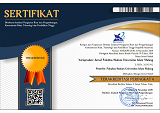
Legal Issues Concerning Surrogacy in Uganda: Taking a Leap from the United Kingdom
DOI:
https://doi.org/10.33474/yur.v8i2.23973Keywords:
Surrogacy, Legal Framework, Uganda, United Kingdom, Parental RightsAbstract
Surrogacy in Uganda presents complex legal and ethical challenges due to the absence of a comprehensive regulatory framework. This study critically examines the legal issues and implications of surrogacy in Uganda and compares the Ugandan legal position with the regulatory framework of the United Kingdom. A doctrinal legal research methodology is employed, drawing on primary and secondary legal sources to evaluate existing legal provisions and interpretive gaps. The findings indicate that Uganda does not yet have specific legislation governing surrogacy, resulting in significant legal uncertainty and regulatory vacuum. This gap raises unresolved legal questions concerning parental rights and status, the protection of the best interests of the child, and the potential commodification and exploitation of women involved in surrogacy arrangements. In contrast, the United Kingdom provides a comparatively more developed legal framework, primarily through statutory and judicial mechanisms that regulate surrogacy arrangements, although certain ethical and legal controversies remain. The novelty of this study lies in its comparative doctrinal analysis of surrogacy regulation between Uganda and the United Kingdom, an area that remains underexplored in existing socio-legal scholarship. Its contribution is twofold: first, it systematically identifies and analyses the legal deficiencies in Uganda’s current approach to surrogacy; and second, it draws normative lessons from the UK legal framework to inform potential regulatory development in Uganda. The study concludes that there is an urgent need for Uganda to enact comprehensive surrogacy legislation to address existing legal ambiguities and safeguard the rights and interests of all parties involved. It recommends a clear statutory framework addressing parental recognition, child welfare, and the prevention of exploitation in surrogacy arrangements.
References
Aidonojie, Paul Atagamen, Esther Chetachukwu Aidonojie, Majekodunmi Toyin Afolabi, Obieshi Eregbuonye, and Adesoji Kolawole Adebayo. “The Competence and Authority of Midwives in Giving Birth without the Assistance of a Doctor in Nigeria.” Jambura Law Review 6, no. 1 (2024): 150–82. https://doi.org/10.33756/jlr.v6i1.20822.
Aidonojie, Paul Atagamen, Esther Chetachukwu Aidonojie, Obieshi Eregbuonye, Saminu Wakili Abacha, and Mercy Okpoko. “Prospect, Legal, and Health Risks in Adopting The Metaverse in Medical Practice: A Case Study of Nigeria.” Jurnal Hukum dan Peradilan 13, no. 3 (2024): 483–522. https://www.jurnalhukumdanperadilan.org/jurnalhukumperadilan/article/view/1033.
Aidonojie, Paul Atagamen, Esther Chetachukwu Aidonojie, Tom Mulegi, and Obieshi Eregbuonye. “Legal Issues Concerning Compulsory COVID-19 Vaccination: Nigeria as a Case Study.” Golden Ratio of Law and Social Policy Review 3, no. 2 (2024): 74–83. https://doi.org/10.52970/grlspr.v3i2.349.
Aidonojie, Paul Atagamen, Esther Chetachukwu Aidonojie, Mercy Osemudiame Okpoko, Eregbuonye Obieshi, and Joshua John Damina. “International Legal Framework in Curtailing Hazardous COVID-19 Medical Waste: Issues and Challenges.” Decova Law Journal 1, no. 1 (2025): 1–17. https://ejournal.pustakaparawali.com/index.php/dlj/article/view/51.
Aidonojie, Paul Atagamen, Oaihimire Idemudia Edetalehn, Simon Ejokeme Imoisi, and Esther Chetachukwu Aidonojie. “A Facile Study Concerning the Legal Issues and Challenges Concerning Doping in Sport.” Synsto Journal of Law 2, no. 1 (2023): 16–21. https://www.synstojournals.com/law/article/view/51.
Aidonojie, Paul Atagamen, Ismaila Hassan, Eregbuonye Obieshi, Joshua John Damina, and Esther Chetachukwu Aidonojie. “The Increase of Child Labour in Nigeria: Legal Custody of Victim by the Nigerian Government as a Panacea.” Journal of Indonesian Constitutional Law 1 (December 2024): 151-175. https://ejournal.pustakaparawali.com/index.php/jicl/article/view/26.
Aidonojie, Paul Atagamen, and Ong Argo Victoria. “The Societal and Legal Missing Link in Protecting a Girl Child against Abuse before and Amidst the Covid-19 Pandemic in Nigeria.” Jurnal Hukum 38, no. 1 (2022): 61–80. https://jurnal.unissula.ac.id/index.php/jurnalhukum/article/view/18412.
Alghrani, Amel, and Danielle Griffiths. The Regulation of Surrogacy in the United Kingdom: The Case for Reform. June 1, 2017. https://sussex.figshare.com/articles/journal_contribution/The_regulation_of_surrogacy_in_the_United_Kingdom_the_case_for_reform/23445044/2.
Dickenson, Donna, and Britta van Beers. “Surrogacy: New Challenges to Law and Ethics.” The New Bioethics: A Multidisciplinary Journal of Biotechnology and the Body 26, no. 4 (2020): 293–97. https://doi.org/10.1080/20502877.2020.1835205.
Elizabeth, Nabiwemba L., Orach Garimoi Christopher, and Kolsteren Patrick. “Determining an Anthropometric Surrogate Measure for Identifying Low Birth Weight Babies in Uganda: A Hospital-Based Cross Sectional Study.” BMC Pediatrics 13 (April 2013): 54. https://doi.org/10.1186/1471-2431-13-54.
Ellenbogen, Adrian, Dov Feldberg, and Vyacheslav Lokshin. “Surrogacy - a Worldwide Demand. Implementation and Ethical Considerations.” GREM - Gynecological and Reproductive Endocrinology & Metabolism, no. Volume 2 (June 2021): 066–073. https://doi.org/10.53260/GREM.212021.
Evans, Nancy. “The Legal Regulation of Surrogacy in the UK: The Need for Change.” Manchester Review of Law, Crime and Ethics 9 (2020): 32. https://access.heinonline.com/HOL/LandingPage?handle=hein.journals/manrvlce9&div=7&id=&page=.
Everingham, Sam G., and Andrea Whittaker. “Trends in Engagement in Surrogacy by Nationality 2018–2020: A Survey of Surrogacy Agencies.” Global Reproductive Health 8, no. 1 (2023): e64. https://doi.org/10.1097/GRH.0000000000000064.
Gamble, Natalie. “A Better Legal Framework for United Kingdom Surrogacy?” In Regulating Reproductive Donation, edited by John B. Appleby, Martin Richards, Rosamund Scott, Stephen Wilkinson, and Susan Golombok. Cambridge University Press, 2016. https://doi.org/10.1017/CBO9781316117446.008.
Hörbst, Viola. “‘You Cannot Do IVF in Africa as in Europe’: The Making of IVF in Mali and Uganda.” Reproductive Biomedicine & Society Online 5, no. 2 (2016): 108–15. https://doi.org/10.1016/j.rbms.2016.07.003.
Horsey, Kirsty. “Surrogacy in the United Kingdom: Present and Future Challenges.” In Handbook of Gestational Surrogacy: International Clinical Practice and Policy Issues, edited by E. Scott Sills. Cambridge University Press, 2016. https://doi.org/10.1017/CBO9781316282618.036.
Jackson, Emily. “Assisted Conception and Surrogacy in the United Kingdom.” In Routledge Handbook of Family Law and Policy, 2nd ed. Routledge, 2020.
Jadva, Vasanti, Helen Prosser, and Natalie Gamble. “Cross-Border and Domestic Surrogacy in the UK Context: An Exploration of Practical and Legal Decision-Making.” Human Fertility (Cambridge, England) 24, no. 2 (2021): 93–104. https://pubmed.ncbi.nlm.nih.gov/30537445/. https://doi.org/10.1080/14647273.2018.1540801.
KIU. “An Appraisal of Contemporary Issues in Proof of Medical Negligence in Nigeria.” Kampala International University Law Journal (KIULJ), ISSN: 2519-9501 6, no. 1 (2024): 327–48. https://journals.kiu.ac.ug/kiulj/article/990c6b98f4/an-appraisal-of-contemporary-issues-in-proof-of-medical-negligence-in-nigeria.
KIU. “Ethical and Socio-Cultural Dimensions of Human Genome Editing War against Natural Order.” Kampala International University Law Journal (KIULJ), ISSN: 2519-9501 5, no. 2 (2023): 130–60. https://journals.kiu.ac.ug/kiulj/article/12aa4ceb05/ethical-and-socio-cultural-dimensions-of-human-genome-editing-war-against-natural-order.
KIU. “Ownership of Intellectual Property Rights in Work Relations under OAPI: A Brief Survey.” Kampala International University Law Journal (KIULJ) 4, no. 1 (2022): 171–88. https://journals.kiu.ac.ug/kiulj/article/d1d3085a65/ownership-of-intellectual-property-rights-in-work-relations-under-oapi-a-brief-survey.
KIU. “The Implications of Emerging Technologies on Intellectual Property Rights in Nigeria: Blockchain and Biometrics in Perspective.” Kampala International University Law Journal (KIULJ) 6, no. 2 (2024): 1–30. https://journals.kiu.ac.ug/kiulj/article/5024472aa8/the-implications-of-emerging-technologies-on-intellectual-property-rights-in-nigeria-blockchain-and-biometrics-in-perspective.
Mukasa, Martha N. “Ethical and Sociocultural Considerations for Use of Assisted Reproductive Technologies Among the Baganda OF Uganda.” Thesis, Georgia State University, 2013.
Nampewo, Zahara. “Assisted Reproductive Technologies in Uganda: Law and Practice.” In Routledge Handbook of Global Health Rights. Routledge, 2021.
Nyamache, Anthony Kebira. “Ethical and Legal Issues on Embryo Adoption, Donation, and Surrogate Motherhood: A Kenyan Perspective.” In Bioethics from the Global South, edited by Lillian Omutoko and Walter Jaoko. Springer Nature Switzerland, 2024. https://doi.org/10.1007/978-3-031-77669-4_9.
Okenwa-Vincent, Emmanuel E. “Ethics of Surrogacy: A Review of the African Perspective.” In Bioethics from the Global South, edited by Lillian Omutoko and Walter Jaoko. Springer Nature Switzerland, 2024.
Olaye-Felix, Bianca, Deborah Emma Allen, and Neil H. Metcalfe. “Surrogacy and the Law in the UK.” Postgraduate Medical Journal 99, no. 1170 (2023): 358–62. https://doi.org/10.1136/postgradmedj-2022-141625.
Omutoko, Lillian. Ethical and Legal Perspectives of Surrogacy in Developed and Sub-Saharan Countries: Case of Australia and Kenya. Bioethics from the Global South, 2025. https://doi.org/10.1007/978-3-031-77669-4_7.
Piersanti, Valeria, Francesca Consalvo, Fabrizio Signore, Alessandro Del Rio, and Simona Zaami. “Surrogacy and ‘Procreative Tourism’. What Does the Future Hold from the Ethical and Legal Perspectives?” Medicina 57, no. 1 (2021): 47. https://doi.org/10.3390/medicina57010047.
Prosser, Helen, and Natalie Gamble. “Modern Surrogacy Practice and the Need for Reform.” Journal of Medical Law and Ethics 4, no. 3 (2016): 257–74. https://doi.org/10.7590/221354016X14803383336842.
Shepherd, Sophia. “Regulating International Commercial Surrogacy: A Balance of Harms and Benefits.” University of Florida Journal of Law & Public Policy 32, no. 2 (2022). https://scholarship.law.ufl.edu/jlpp/vol32/iss2/3.
Sills, E. Scott, ed. Handbook of Gestational Surrogacy: International Clinical Practice and Policy Issues. Cambridge University Press, 2016. https://doi.org/10.1017/CBO9781316282618.
Sloth-Nielsen, Julia. “Chapter 26: Surrogacy in Africa.” In Surrogacy in Africa. Elgaronline, 2024. https://www.elgaronline.com/edcollchap/book/9781802207651/book-part-9781802207651-34.xml.
Wade, Katherine, Zaina Mahmoud, Kirsty Horsey, et al. Future Directions in Surrogacy Law: Law and Policy Reform in the UK and Beyond. Bristol University Press, 2025. https://muse.jhu.edu/pub/345/edited_volume/book/126649.
Wang, Samantha XY, Emily L. Ho, Marie Grill, et al. “Peripheral Neuropathy in Primary HIV Infection Associates with Systemic and CNS Immune Activation.” Journal of Acquired Immune Deficiency Syndromes (1999) 66, no. 3 (2014): 303–10. https://doi.org/10.1097/QAI.0000000000000167.
Warden, John. “Surrogacy to Be Reviewed in United Kingdom.” News. BMJ 314, no. 7097 (1997): 1781. https://doi.org/10.1136/bmj.314.7097.1781c.
Warrington, Molly. “Challenging the Status Quo: The Enabling Role of Gender Sensitive Fathers, Inspirational Mothers and Surrogate Parents in Uganda.” Educational Review 65, no. 4 (2013): 402–15. https://doi.org/10.1080/00131911.2012.689274.
Whittaker, Andrea. “Surrogacy.” In The Routledge Handbook of Anthropology and Reproduction. Routledge, 2021.
Downloads
Additional Files
Published
How to Cite
Issue
Section
License
Copyright (c) 2025 Paul Atagamen Aidonojie, Esther Chetachukwu Aidonojie, Obieshi Eregbuonye , Mercy Osemudiame Okpoko, Collins Ekpenisi

This work is licensed under a Creative Commons Attribution 4.0 International License.
The publication and dissemination of the article is subject to an attribution license (CC BY) under the Creative Commons Attribution License, so that others free also to copy, and redistribute the material in any medium or format, remix, transform and build upon material for any purpose, even commercially, as long as they give credit to the author for the authentic work.