Linguistic strategies in attracting YouTube subscribers: A pragmatics perspective
DOI:
https://doi.org/10.33474/j-reall.v6i2.23460Keywords:
communication strategies, linguistics, pragmatics, speech acts, YouTubeAbstract
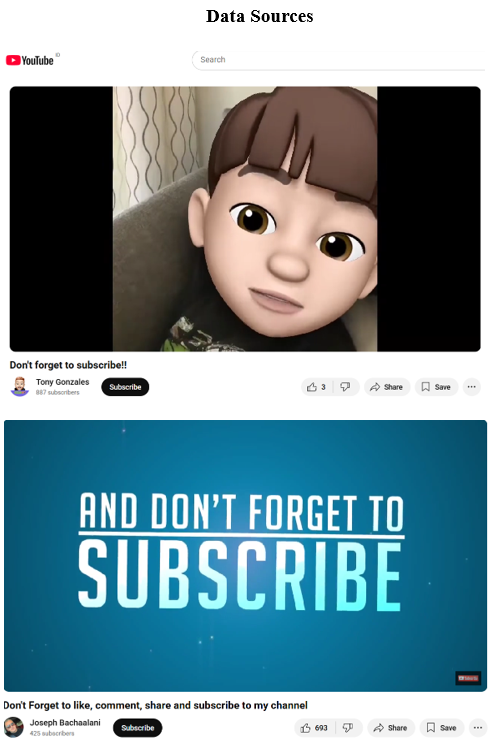
The rapid development of digital media has changed communication patterns, making YouTube a competitive space to attract and retain audiences. However, the study of creators' linguistic strategies in the context of digital marketing communication through speech act theory is still limited. This study aims to examine the linguistic strategies used by YouTube content creators to attract attention and increase the number of subscribers, using a pragmatic approach based on Searle speech act theory. The main focus of this study is to identify the types of speech acts such as assertives, directives, commissives, expressives, and declaratives that appear in various YouTube videos, as well as their strategic roles in building relationships with audiences. The research method used is descriptive qualitative with data collection techniques through observation and video transcription from seven relevant YouTube sources. The results of the study show that directive and assertive speech acts dominate the speech used by creators, especially in invitations to like, subscribe, and follow the links provided. Commissive and expressive speech acts also play an important role in creating emotional attachment and building trust. These findings indicate that linguistic strategies through speech acts are an effective tool in digital communication to influence audience behavior and expand the reach of content. These findings also expand the application of pragmatic theory in digital media and creative content, and contribute to the study of applied linguistics and media literacy. However, limited data, subjectivity of interpretation, and the lack of consideration of multimodal aspects indicate the need for further research with a broader scope and approach.
References
Anagaw, A. (2019). An analysis of speech act in transactional discourse: Bati Market in Focus. Abyssinia Journal of Business and Social Sciences, 4(1), 10–18. https://doi.org/10.20372/ajbs.2019.4.1.129
Angelina, I., Barus, E. E., & Herlina, S. (2023). Strategi pemasaran media sosial pada Bisnis Kreatif Kriya Rajut Handmade Risjoot Langkat (Social Media Marketing Strategy in Creative Business Handmade Knitting Craft Risjoot Langkat). Jurnal El Rayyan: Jurnal Perbankan Syariah, 2(2), 155–166. https://doi.org/10.59342/jer.v2i2.437
Ayeomoni, O. M., & Akinkuolere, O. S. (2012). A pragmatic analysis of victory and inaugural speeches of President Umaru Musa Yar’Adua. Theory and Practice in Language Studies, 2(3), 461–468. https://doi.org/10.4304/tpls.2.3.461-468
Azimova, S., & Madaminova, S. (2025). Persuasive speech acts in online advertising and influencer marketing. Modern Science and Research, 4(5), 841-845. https://inlibrary.uz/index.php/science-research/article/view/89900
Balogun, S., & Murana, M. O. (2018). Language in political discourse: A pragmatic study of presupposition and politeness in the inaugural speech of President Donald Trump. Bulletin of Advanced English Studies, 1(1), 64–76. https://doi.org/10.31559/BAES2018.1.1.6
Bosco, F. M., Tirassa, M., & Gabbatore, I. (2018). Why pragmatics and theory of mind do not (completely) overlap. Frontiers in Psychology, 9. https://doi.org/10.3389/fpsyg.2018.01453
Chang, W.-L. M. (2015). Face and face practices in Chinese talk-in-interaction: A study in interactional Pragmatics. Equinox.
Chen, G., Li, Y., & Sun, Y. (2023). How YouTubers make popular marketing videos? Speech acts, move structure, and audience response in YouTube influencer marketing videos. SAGE Open, 13(1), 21582440231152228. https://doi.org/10.1177/21582440231152227
Cox, D. D., & McLeod, S. (2014). Social media marketing and communications strategies for school superintendents. Journal of Educational Administration, 52(6), 850-868.
https://doi.org/10.1108/JEA-11-2012-0117
Fadillah, N., Ekapratama, D. Y., Amanullah, I., Nabila, I., Safinatunnajah, F., Ceren, D., & Iswatiningsih, D. (2025). Bahasa iklan dalam pemasaran rumah: Studi analisis wacana (Advertising Language in Home Marketing: A Discourse Analysis Study). Artikulasi: Jurnal Pendidikan Bahasa Dan Sastra Indonesia, 5(1), 97–105.
https://doi.org/10.17509/artikulasi.v5i1.79990
Farijanti, D., Martawijaya, A. P., Kurniati, Y., Apriyanto, A., Liyana, C. I., Mahmudah, F., Tartila, T., & Bunga, J. (2024). Buku ajar pengantar linguistik. PT. Sonpedia Publishing Indonesia.
Floreddu, P. B., & Cabiddu, F. (2016). Social media communication strategies. Journal of Services Marketing, 30(5), 490–503. https://doi.org/10.1108/JSM-01-2015-0036
Geurts, B. (2019). Communication as commitment sharing: Speech acts, implicatures, common ground. Theoretical Linguistics, 45(1–2), 1–30. https://doi.org/10.1515/tl-2019-0001
Gisladottir, R. S., Bögels, S., & Levinson, S. C. (2018). Oscillatory brain responses reflect anticipation during comprehension of speech acts in spoken dialog. Frontiers in Human Neuroscience, 12. https://doi.org/10.3389/fnhum.2018.00034
Hasan, K., Husna, A., Muchlis, M., Fitri, D., & Zulfadli, Z. (2023). Transformasi komunikasi massa era digital antara peluang dan tantangan. JPP Jurnal Politik Dan Pemerintahan, 8(1), 41–55. https://ojs.unimal.ac.id/jpp/article/view/12608
House, J., & Kádár, D. Z. (2023). Speech acts and interaction in second language pragmatics: A position paper. Language Teaching, 1–12. https://doi.org/10.1017/S0261444822000477
Jannah, R., & Hidayat, D. N. (2020). Commuter line (KRL) advertisements: Discourse analysis of structure and language function. Jurnalistrendi: Jurnal Linguistik, Sastra Dan Pendidikan, 5(1), 1–9. https://doi.org/10.51673/jurnalistrendi.v5i1.215
Jawad, E. B., & Noureddine, A. (2024). Speech acts in the written language of advertisements: McDonald’s advertisements as a case study. CaLLs: Journal of Culture, Arts, Literature, and Linguistics, 10(2), 211–224. https://doi.org/10.30872/calls.v10i2.15467
Kabalmay, T., & Susanto, D. (2025). Speech acts in pragmatic linguistics: A conceptual review and its applications. Lexeme: Journal of Linguistics and Applied Linguistics, 7(2), 271–278.
https://doi.org/10.32493/ljlal.v7i2.48753
Karim, S. A., & Saksono, L. (2023). Strategi linguistik media pariwisata selama pandemi Covid 19 di Jerman. IDENTITAET, 12(2), 154–169.
https://ejournal.unesa.ac.id/index.php/identitaet/article/view/56132
Lacarcel, F. J., & Huete, R. (2023). Digital communication strategies used by private companies, entrepreneurs, and public entities to attract long-stay tourists: a review. International Entrepreneurship and Management Journal, 19(2), 691–708. https://doi.org/10.1007/s11365-023-00843-8
Leech, G., & Thomas, J. (2002). Language, meaning and context: pragmatics. In An encyclopedia of language (pp. 105–124). Routledge.
Liddicoat, A. J. (2014). Pragmatics and intercultural mediation in intercultural language learning. Intercultural Pragmatics, 11(2). https://doi.org/10.1515/ip-2014-0011
Lutzky, U., & Kehoe, A. (2017). “I apologise for my poor blogging”: Searching for apologies in the Birmingham Blog Corpus. Corpus Pragmatics, 1(1), 37–56. https://doi.org/10.1007/s41701-017-0004-0
Macías-Borrego, M. (2025). A pragmatic analysis of Shakespeare’s Richard III: Language strategies: persuasion, domination, and control. Humanities, 14(2), 27.
https://doi.org/10.3390/h14020027
Mukminin, M. S. (2024). Directive speech acts in humorous discourse on YouTube channel: Warintil Official as case study. Translation and Linguistics (Transling), 4(1), 57–69. https://doi.org/10.20961/transling.v4i1.85766
Nesterenko, V., Miskiewicz, R., & Abazov, R. (2023). Marketing communications in the era of digital transformation. Virtual Economics, 6(1), 57–70. https://www.ceeol.com/search/article-detail?id=1161927
O’Malley, C., Langton, S., Anderson, A., Doherty-Sneddon, G., & Bruce, V. (1996). Comparison of face-to-face and video-mediated interaction. Interacting with Computers, 8(2), 177–192. https://doi.org/10.1016/0953-5438(96)01027-2
Prakoso, J. H. (2023). Strategi komunikasi public relations PT Cimory Group dalam membangun brand image (Public relations communication strategy of PT Cimory Group in building brand image). Akrab Juara: Jurnal Ilmu-Ilmu Sosial, 8(1), 82–93.
https://doi.org/10.58487/akrabjuara.v8i1.2024
Pratiwi, V. U., & Rohmadi, M. (2021). Pragmatic approach to Indonesian speaking skills for student vocational high schools. International Journal of Linguistics, Literature and Culture, 7(4). https://doi.org/10.21744/ijllc.v7n4.1795
Rabiah, S. (2012). Language as a tool for communication and cultural reality disclosure. The 1st International Conference on Media, Communication, and Culture, Muhammadiyah Yogyakarta University, Indonesia. https://osf.io/nw94m/download
Rizaldi, A., Margareta, F., Simehate, K., Hikmah, S. N., Albar, C. N., & Rafdhi, A. A. (2021). Digital marketing as a marketing communication strategy. International Journal of Research and Applied Technology (INJURATECH), 1(1), 61–69. https://doi.org/10.34010/injuratech.v1i1.5639
Schmidt, J. V., & Venturi, G. (2024). Axioms and postulates as speech acts. Erkenntnis, 89(8), 3183–3202. https://doi.org/10.1007/s10670-023-00673-8
Searle, J. R. (1979). Expression and meaning: Studies in the theory of speech acts. Cambridge University Press.
Sornig, K. (1989). Some remarks on linguistic strategies of persuasion. In R. Wodak (Ed.), Language, Power and Ideology: Studies in political discourse (pp. 95–114). John Benjamins Publishing Company. https://doi.org/10.1075/ct.7.09sor
Taguchi, N. (2018). Contexts and pragmatics learning: Problems and opportunities of the study abroad research: Language Teaching, 51(1), 124–137. https://doi.org/10.1017/S0261444815000440
Timpal, R. S., Massie, J., & Pandowo, M. (2022). The role of brand ambassadors on consumer purchase decision on Tokopedia marketplace. Jurnal EMBA: Jurnal Riset Ekonomi, Manajemen, Bisnis Dan Akuntansi, 10(3), 652–659. https://doi.org/10.35794/emba.v10i3.42366
Widyastuti, D. A., Wiloso, P. G., & Herwandito, S. (2017). Analisis personal branding di media sosial (Studi kasus personal branding Sha’an D’Anthes di Instagram). Jurnal Inovasi, 11(1), 1–16. https://jit.binadarma.ac.id/journal/index.php/jurnalinovasi/article/view/649
Downloads
Published
How to Cite
Issue
Section
License
Copyright (c) 2025 Dewi Yanti

This work is licensed under a Creative Commons Attribution 4.0 International License.
Authors who publish this journal agree to the following terms:
- Authors retain copyright and grant the journal right of first publication with the work simultaneously licensed under a Creative Commons Attribution License that allows others to share the work with an acknowledgement of the work's authorship and initial publication in this journal.
- Authors can separately make additional contractual arrangements for non-exclusive distribution published by the journal (e.g., publish it in a book), with an acknowledgement of its initial publication in this journal.
- Authors are allowed and encouraged to send their work via online (e.g., in the institutional repositories or their website) after published by the journal.